Discover affordable bike computers that pack essential GPS, route navigation, and ride data into compact designs. This guide highlights five cost-effective options that suit daily commutes, training rides, and long-distance trips without sacrificing core features. All selections offer reliable data, straightforward setup, and durable builds for American cyclists seeking value.
Summary of chosen products:
| Product | Brand | Key Benefit | Waterproof | Display |
|---|---|---|---|---|
| COOSPO Bike Computer Wireless GPS (BC107) | CooSpo | Compact, affordable GPS with auto backlight | IP67 | 2.4″ LCD |
| GEOID CC600 Color Screen Bike Computer | GEOID | Color navigation screen with auto re-routing | Yes | 2.4″ Color |
| iGPSPORT BSC200S GPS Bike Computer | iGPSPORT | App-based routing, one-touch navigation | IPX7 | 2.4″ |
| Bikevee GPS Speedometer & Odometer | Bikevee | Long battery life, auto start/stop | IPX7 | 2.4″ |
| CATEYE Urban Wireless Bike Computer | CATEYE | Odometer, calorie tracking, easy setup | Water resistant | Standard size |
COOSPO Bike Computer Wireless GPS (BC107)
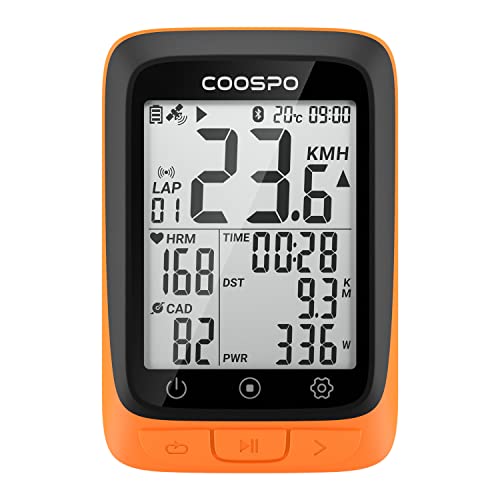
This compact head unit uses BC107 GPS to deliver reliable position data at a budget-friendly price. The 2.4-inch display keeps essential ride metrics legible, while a lightweight, glass-filled ABS and TPU chassis provides durability without bulk. The model emphasizes simplicity and value, making it suitable for riders who want dependable GPS without premium costs. Note that packaging has been upgraded, and the long front mount is sold separately if needed.
GEOID CC600 Color Screen Bike Computer

The CC600 introduces a vivid 2.4-inch color display with a durable Asahi glass cover and an intuitive three-button interface. It offers colorful route navigation with turn reminders, zooming, and pop-up notifications at turns. With external GPX upload via a companion app and automatic re-routing, riders stay on course even when deviations occur. WiFi and Bluetooth enable fast firmware updates and seamless data transfer, improving the user experience without a premium price.
iGPSPORT BSC200S GPS Bike Computer

The BSC200S provides route navigation through official iGPSPORT apps or third-party maps like Strava and Komoot. Its one-touch navigation lets you save points and start routes quickly, with useful reminders and notifications. The device supports turn reminders and SMS/app alerts, helping riders stay informed during rides. Water resistance adds durability for wet conditions, and the 2.4-inch display offers clear data during daytime or night riding.
Bikevee GPS Speedometer & Odometer

Bikevee emphasizes long battery life with a 650 mAh cell, delivering up to 28 hours of continuous use. The device tracks essential ride data such as speed (MPH/KM/H), trip time, distance, and max/avg speeds. The 2.4-inch LCD display includes auto backlight for readability in bright or dim conditions. IPX7 waterproofing ensures reliability in rain or splashes, while auto start/stop keeps ride data accurate without manual input.
CATEYE Urban Wireless Bike Computer

CATEYE’s Urban Wireless model focuses on essential stats with an easy setup process and secure mounting via the FlexTight Bracket. It displays current, max, and average speeds, total and trip distances, elapsed time, calories, pace indicator, and a clock. The manual odometer setting lets you preserve mileage across battery changes, while quick mounting ensures riders can get on the road faster without compromising data accuracy.
Buying Guide: Key Purchase Considerations
- Power and positioning: Look for GPS models with reliable satellite reception and minimal cold start time. Consider devices offering multi-system positioning (GPS/glonass) for broader coverage.
- Data and display: A readable 2.4-inch screen is common and balances information with compact form. Color screens can improve readability in bright sun, while monochrome screens may suffice for budget options.
- Navigation features: Decide between standalone route navigation, GPX import, and app-based routing. Some models offer automatic re-routing, turn reminders, and color-coded maps for easier navigation.
- Connectivity: Bluetooth and WiFi enable firmware updates, cloud syncing, and sensor integration (heart rate, cadence, power meters via ANT+). Ensure compatibility with your existing sensors.
- Durability and weather: IPX-rated waterproofing improves reliability in wet conditions. Durable housings and screen protection are important for regular outdoor use.
- Battery life: For long rides, look for units with extended battery life (12–28+ hours). Consider auto start/stop features to avoid unnecessary data gaps.
- Mounting and compatibility: Check mounting system strength and whether you need extra accessories, like longer mounts or quick-release brackets, to fit your bike setup.
- Software ecosystem: Apps or cloud platforms (e.g., Strava, Komoot) can enhance data analysis, route planning, and firmware updates. Ensure the device supports your preferred ecosystem.
These budget bike computers deliver core riding metrics, simple navigation, and durable builds without premium pricing. When comparing models, prioritize GPS reliability, navigation options, display readability, battery life, and sensor compatibility to match your cycling routine and climate conditions.