Whether you’re chasing bigger lifts or steady gains, a dedicated fitness journal helps you track progress, stay accountable, and optimize workouts. The following five products are selected for lifters who want clear logging, goal setting, and practical planning. Each option offers durable layouts, focused prompts, and space to record sets, reps, and measurements. Explore quick-reference features and find the right match for your lifting routine.
Product summary
- NewMe Fitness Journal for Women & Men — Workout Planner and Exercise Log Book
- Nextnoid Hardcover Fitness Journal — A5 Workout Planner for Men & Women
- SaltWrap Daily Fitness Planner — Gym Workout Training Log & Food Tracker
- NewMe Fitness Journal for Women/Men — Food & Workout Journal
- Field Equipt Gym Workout Journal & Fitness Tracker — 4 Pack
NewMe Fitness Journal for Women & Men

The NewMe Fitness Journal is designed to track workouts, weight loss, and muscle gain over several months. It emphasizes goal-focused health tracking and provides guidelines on which exercises target different muscle groups. The journal makes it easy to note daily activities, calories, and progression, helping lifters understand what works best for their routines. The included guidelines support a structured approach to training and nutrition, with sections that reveal what’s effective at a glance.
Nextnoid Hardcover Fitness Journal

The Nextnoid Fitness Journal is built for daily and weekly tracking with clear, large pages suitable for heavy lifting notes. It supports planning up to eight months of workouts and encourages setting next-week goals to sustain momentum. Its design highlights readability and accountability, offering space to record sets, reps, weights, and progress milestones. The system is straightforward, making it a practical tool for both gym and home workouts while helping you monitor progress over time.
SaltWrap Daily Fitness Planner

The SaltWrap planner combines gym workout logging with a built-in nutrition focus. It’s suitable for both experienced lifters and beginners who want a holistic view of training and food choices. The planner emphasizes daily and weekly planning with sections dedicated to goal setting and progress milestones. Users can log reps, sets, and nutrition in one place, helping to build consistent habits and track overall performance across lifting and diet components.
NewMe Fitness Journal for Women/Men — Food & Workout Journal

This NewMe edition combines nutrition tracking with workouts, offering a two-month-plus tracking window. It guides users on measuring body fat, maximum lifts, and target muscle groups, supporting a data-driven lifting plan. The dual-entry pages provide ample space to log exercises, weights, sets, and body measurements, helping lifters correlate changes in strength with dietary adherence. The journal is structured for consistent daily use and long-term trend analysis.
Portage Fitness & Workout Notebook
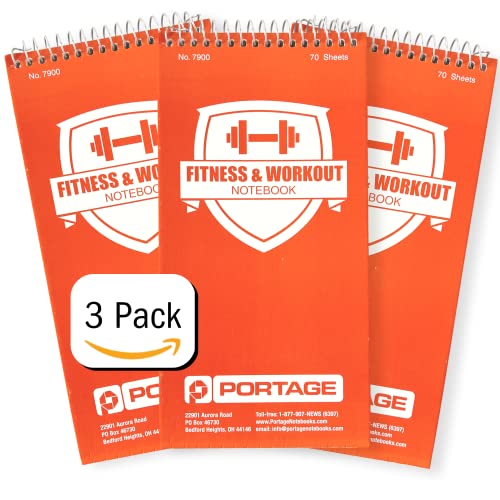
The Portage notebook focuses on compact logging with a pocket-friendly 4” x 8” format. It features sturdy pages and a simple, no-frills layout designed for on-the-go writing. For lifters, it provides a dependable place to record weightlifting workouts, cardio sessions, and measurements without bulky pages. The set of three notebooks offers substantial logging capacity while remaining easy to carry during gym sessions.
Buying Guide
- Scope and layout: Choose a planner that aligns with the level of detail you want (reps, weights, tempo, body measurements, nutrition). A larger format may provide easier writing for intense lifting sessions, while a compact size is convenient for the bag.
- Durability and binding: For daily use in the gym, look for sturdy covers, spiral or lay-flat bindings, and quality paper that resists bleed-through from markers or pencils.
- Tracking scope: Decide whether you want to log only workouts or a combination of nutrition and body metrics. Some planners emphasize meal tracking alongside workouts to support muscle gain or fat loss goals.
- Future planning: If you aim to progress over months, a planner with weekly and monthly views helps set up training cycles and deloads, while a simple daily log may suit short-term goals.
- Ease of use: Large fonts, clear sections, and minimal clutter improve usability during workouts. Look for systems that provide guided prompts for exercise targets and muscle groups.
- Value and durability: Consider packs or multi-book options if you prefer a longer tracking window or if you want to keep separate logs for training and nutrition. Higher-quality paper and binding are worth the investment for long-term use.
- Compatibility with lifting goals: Some planners are tailored to bodybuilding, powerlifting, or general fitness. Match the product’s focus with your primary lifting objectives and preferred training style.
- Digital backup: If you want to compare data over time, check whether the planner offers an optional digital companion or printable templates for recurring workouts.
- Reference guidance: Look for journals that provide exercise targets, guidelines for associating movements with muscle groups, and tips for recording progress accurately.
- Budget considerations: While all options provide value, a balance between price, durability, and intended tracking scope will help you select the best long-term tool for lifting progress.
These products collectively support lifters by offering structured logging, goal setting, and progress analysis. Each option provides a practical way to capture lifts, repetitions, weights, and body metrics while enabling reflections on what drives gains in strength and hypertrophy. By combining workout data with nutrition or body measurements, you can form a more complete view of training effectiveness over time.