Transform any living space into a versatile cycling gym with a reliable home cycle trainer. This guide highlights top-rated magnetic bike trainer stands that fit a wide range of wheel sizes, offer multiple resistance levels, and simplify setup so you can ride indoors year-round. Below are five options that balance stability, ease of use, and quiet operation for American homes and apartments alike.
| Product | Brand | Wheel Compatibility | Resistance Levels |
|---|---|---|---|
| Sportneer Bike Trainer – Magnetic Stationary Bike Stand | Sportneer | 26–28″ or 700C, rear axle 4.92″–6.57″ | 6 levels |
| CXWXC Bike Trainer (Model 1) | CXWXC | 26″–29″ including 700C | 6 levels |
| CXWXC Bike Trainer (Model 2) | CXWXC | 26″–29″ including 700C | 6 levels |
| VEVOR Bike Trainer | VEVOR | 26″–29″ or 700C | 6 levels |
| Saris Fluid2 Indoor Bike Trainer | Saris | Road and Mountain bikes | Variable (fluid resistance) |
Sportneer Magnetic Bike Trainer

The Sportneer indoor bike trainer is designed for broad wheel compatibility, suiting road and mountain bikes with 26–28″ or 700C wheels. It includes a quick-release skewer and a front wheel riser block to improve stability during setup. An adjustable 6-level resistance system lets riders simulate a variety of terrains, from flats to steep climbs, via a handlebar remote. This trainer emphasizes quick mounting and easy removal, enabling fast transitions between indoor training and outdoor riding.
Key features include a wide compatibility range, a bar-mounted remote for simple resistance changes, and a press-down lever clamp for straightforward bike mounting. The quick-release skewer and front wheel riser block help ensure a stable, time-saving installation. This model appeals to cyclists seeking a versatile, user-friendly trainer for endurance workouts and interval sessions at home.
CXWXC Bike Trainer (Model A)

The CXWXC stationary stand is built to support bikes with 26″–29″ wheels, including 700C, and can handle up to approximately 330 pounds. It features a drive-by-wire resistance system that allows six centralized levels adjustable from the handlebars, enabling riders to increase difficulty without leaving the saddle. A pyramid-shaped frame contributes to stability during intense intervals, while the included quick-release skewer and front wheel riser block streamline setup and alignment. This trainer is well-suited for riders who want reliable, mid-range resistance with solid construction.
CXWXC Bike Trainer (Model B)
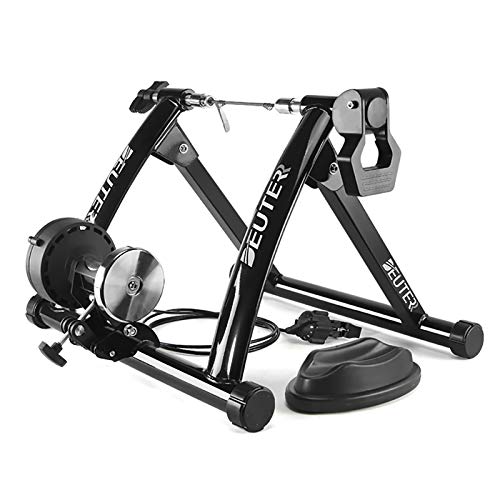
This CXWXC model mirrors the 26″–29″ wheel range and 700C compatibility, featuring the same six resistance levels and drive-by-wire control. The sturdy pyramidal construction improves stability, while the front wheel riser block and quick-release skewer support quick transitions from indoor to outdoor rides. The design emphasizes robust materials to maintain performance under repeated use, making it a practical option for riders focused on structured indoor training programs.
VEVOR 6-Level Magnetic Bike Trainer
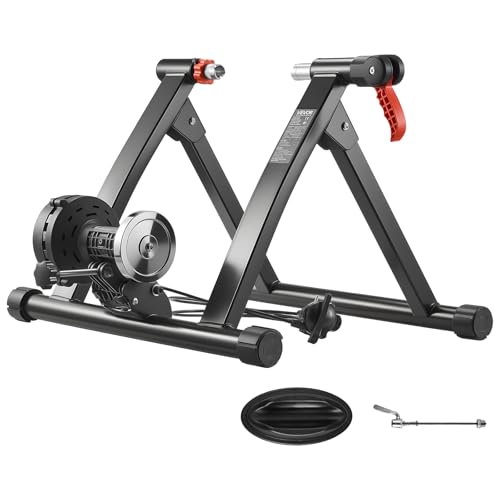
The VEVOR trainer emphasizes efficient, quiet operation with a 6-level magnetic resistance system and a heavy-duty aluminum shaft. It supports wheels from 26″ to 29″ and 700C, making it a versatile choice for road and mountain bikes. The trainer is designed to reduce friction and vibration, delivering a smoother ride indoors while maintaining a stable base for dynamic workouts such as intervals and simulated sprints. This model is ideal for cyclists seeking a balance of durability and low noise in a home setting.
Saris Fluid2 Indoor Bike Trainer
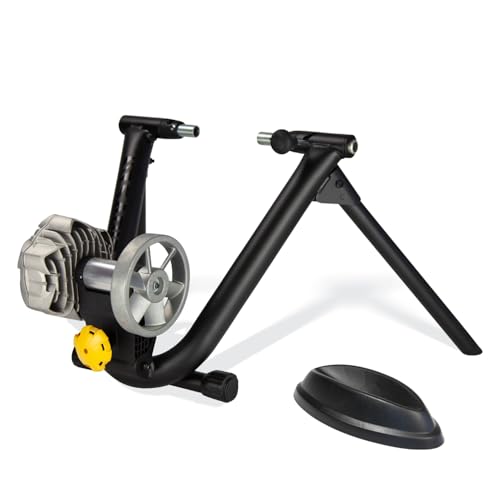
The Saris Fluid2 uses a precision fluid resistance mechanism to mimic real-road feel with progressive resistance that increases as you pedal harder. It’s designed for a quieter, smoother ride thanks to a large flywheel and balanced performance. The trainer folds for compact storage and offers straightforward wheel-on setup, pairing well with apps like Zwift for structured virtual workouts. It’s a strong option for riders who value authentic feel and quiet operation during indoor sessions.
Buying Guide: Key Purchase Considerations
- Wheel Compatibility: Ensure the trainer fits your bike’s wheel size (commonly 26″–29″ and 700C). Some models handle a wider range, which is useful for multiple bikes in a household.
- Resistance System: Magnetic resistance with multiple levels is typical; the level range matters for simulating flats, climbs, and intervals. Some models offer fluid resistance for a more road-like feel.
- Stability and Build: Look for a pyramid or wide-base frame to reduce wobble during sprints or heavy cadence. Weight capacity matters if you ride with a heavy bike or accessories mounted.
- Setup and Storage: Quick-release skewers, front wheel riser blocks, and foldable frames simplify setup and storage, which is especially important for apartments or small spaces.
- Noise Level: Quieter operation is preferable for shared living spaces. Heavier flywheels and quality bearings help minimize noise and vibration.
- Accessory Package: Some trainers include quick-release skewers and front wheel risers; others may require separate purchases. Consider whether you need these items to complete setup.
- App and Training Integration: If you plan to use virtual training apps (like Zwift), confirm compatibility and how seamlessly the trainer interacts with the app for pace and resistance synchronization.
- Durability and Warranty: Heavier, metal constructions tend to last longer. Check warranty terms when evaluating long-term value and confidence in the product.
When selecting a home cycle trainer, consider your typical workout style—endurance rides, high-intensity intervals, or steady-state training—and your space constraints. The options above present a balance of compatibility, resistance variety, stability, and ease of setup to support consistent indoor cycling throughout the year.