For climbers tackling icy terrain, a reliable rope is a critical safety tool. This guide highlights five top-rated ice climbing ropes and related cords, focusing on static and low-stretch designs ideal for rescue, escape, and ascent. Each option emphasizes durability, abrasion resistance, and clear handling characteristics to support safe climbs in cold environments.
Summary of chosen products:
| Product | Brand | Type | Key Feature |
|---|---|---|---|
| X XBEN Outdoor Climbing Rope | X XBEN | Static/escape rope | Low outer skin sliding rate; lightweight and sturdy |
| AOLEBA 10.5 mm Static Climbing Rope | AOLEBA | Static rope | CE EN 892 certified; high visibility |
| Pemoupnd Static Rope with Steel Wire | Pemoupnd | Static rope with built-in steel wire | High load-bearing safety guarantee |
| AOLEBA 10.5 mm Static Climbing Rope (2nd variant) | AOLEBA | Static rope | Two carabiner hooks and strong protection thimbles |
| NewDoar 10.0–14.0 kN Static Climbing Rope | NewDoar | Static rope | Low weight; multiple lengths; high abrasion resistance |
X XBEN Outdoor Climbing Rope 32 ft

The 32-foot X XBEN rope is designed as a compact escape rope with a focus on smooth operation and reduced outer-skin wear. It features a full-core construction described as 13 whole core strands, contributing to balanced strength and reliability in rescue or emergency scenarios. The rope emphasizes low ductility to minimize unexpected extension during use, and its modest diameter supports easy handling and portability for quick deployment.
AOLEBA 10.5 mm Static Rope, 32–230 ft

The AOLEBA static climbing rope series offers 10.5 mm diameter with multiple length options from 32 ft to 230 ft. It emphasizes abrasion resistance, moderate softness, and solid binding. The CE EN 892:2012+A2:2021 certification ensures standard compliance, and bright colors improve visibility in varying weather. Options include either double-ended sewn ends or two-hook ends, with a maximum tensile force around 23 kN and a maximum bearing around 1900 kg, making it suitable for controlled emergency use and belayed climbs where appropriate.
Pemoupnd Static Rope With Built-in Steel Wire

This rope integrates a built-in steel wire for enhanced impact resistance and load-bearing, offering a robust safety guarantee for climbers tackling challenging ice routes. It is certified to EN 892:2012+A3:2023 and CE standards, which supports compliance and performance expectations. The design aims to deliver a high-strength option with a maximum load-bearing capacity of about 6613 pounds, supporting more secure descents and controlled ascents in variable icy conditions.
AOLEBA 10.5 mm Static Rope, 32 ft to 230 ft (Second Variant)
This AOLEBA variant mirrors the 10.5 mm static rope family with similar certifications and features. It highlights the inclusion of two carabiner hooks with a strong stainless steel protection thimble rigging, ensuring improved safety during rigging, prusik setups, or rescue operations. Its bright color and consistent diameter help maintain visibility and predictable handling in cold or low-light conditions.
NewDoar 10M/20M/30M Static Climbing Rope
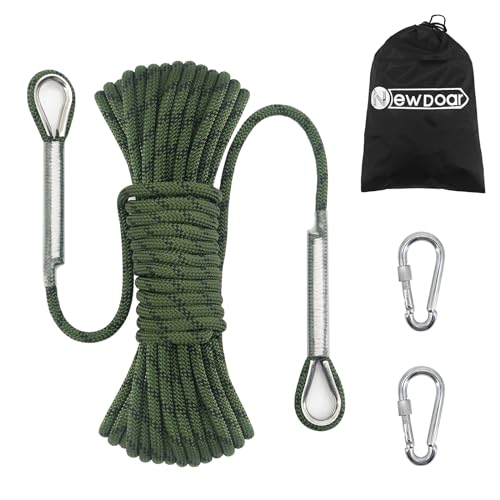
NewDoar offers a compact static climbing rope with lengths from 33 ft to 98 ft, designed for ice climbing and rescue use. It combines high abrasion resistance with a double braid core and protective outer braid to resist wear. The rope is engineered for easy handling and knot tying, with a high-strength polyester construction and reinforced inner core, supporting reliable performance in rigorous ice conditions.
ZEPSEON 8mm Prusik Cord for Ice Climbing

The ZEPSEON 8mm accessory cord is UIAA certified and designed as a prusik cord for climbing, canyoneering, and lanyard setups. It features a double-braid construction for abrasion resistance, light weight, and strong tensile strength around 17 kN. The compact diameter makes it suitable for auxiliary rigging, rescue scenarios, and cordage work alongside longer static ropes in ice climbs.
Buying Guide: Key Purchase Considerations
Purpose and type: Static ropes are ideal for rescue, escape, and anchor work, while dynamic ropes are better for lead climbing. For ice climbing and rescue scenarios, prioritize static or low-stretch options with reliable breaking strength and certification.
Certification and safety standards: Look for EN 892 or UIAA certifications, CE marks, and clear tensile strength and max load specifications. Certifications indicate adherence to safety benchmarks for ice environments.
Diameter and length: Ropes in the 8–10.5 mm range balance handling and strength while remaining manageable with cold hands. Choose lengths appropriate for your planned routes and rescue needs, with common options at 32 ft, 66 ft, 98 ft, and longer.
Durability features: Abrasion resistance, protective braiding, and reinforced ends improve rope longevity in rugged ice and rock surfaces. Ropes with protective thimbles or metal hooks can enhance rigging safety in fixed setups.
Visibility and color: Bright colors improve visibility in snow and low-light conditions, aiding quick identification and rope tracking during climbs.
Compatibility and accessories: Consider whether a rope includes carried accessories like rope bags, carabiner hooks, or sewn ends. For some setups, built-in features (like steel wire cores) offer enhanced safety but may affect handling and weight.
Weight and portability: Lighter ropes are easier to transport to ice crags but may trade off some durability. For frequent alpine travel, lighter static options can be advantageous, paired with a robust belay setup and anchor system.
Maintenance and care: Drying, inspecting for core damage, and checking wear on outer sheaths are essential. Store ropes away from direct heat and sunlight to preserve fiber integrity over time.