Interlocking gym mats provide a cushioned, protective surface for workouts, kids’ playtime, and basement or garage flooring. This guide highlights five top options designed for durability, easy cleaning, and versatile layouts. Each product uses EVA foam or a dual-layer design to absorb impact, reduce noise, and protect floors from equipment. Read on to compare coverage, tile sizes, and installation ease to find the right fit for your space and activity level.
| Product | Brand | Tiles / Pieces | Coverage | Size |
|---|---|---|---|---|
| ProsourceFit Puzzle Exercise Mat (12 Tiles) | ProsourceFit | 12 Tiles | 48 Sq Ft | 24″ x 24″ x 1/2″ |
| ProsourceFit Puzzle Exercise Mat (36 Tiles) | ProsourceFit | 36 Tiles | 144 Sq Ft | 24″ x 24″ x 1/2″ |
| bemaxx Gym Mats Set (18 Pcs) | BeMaxx | 18 Pieces | 18 Sq Ft | 12.6″ x 12.6″ x 0.4″ |
| SUPERJARE 0.4″ Thick Mats (24 Pcs) | SUPERJARE | 24 Pieces | 96 Sq Ft | Varies |
| Art3d Eva Puzzle Mats (6 Tiles) | Art3d | 6 Tiles | 24 Sq Ft | 24″ x 24″ x 1/2″ |
ProsourceFit Puzzle Mats — 12 Tiles

The ProsourceFit 12-tile set offers a compact option for smaller spaces, with a 48-square-foot footprint and 1/2-inch thick EVA foam. The tiles interlock securely to form a seamless surface that cushions joints during routine workouts or serves as a soft play area for children. The material is water-resistant and relatively easy to wipe clean, making it suitable for indoor use in garages, basements, or home gyms. While the color and texture may vary slightly by batch, the tiles maintain a stable, non-skid surface when laid on flat, hard floors.
Key features include high-density foam for comfort and sturdy edge connections to minimize gaps. It is positioned as a versatile option for users seeking quick setup and easy disassembly, especially in rooms where a temporary or modular mat configuration is beneficial. Consider pairing with edge pieces (if available) for a more finished look and to prevent tripping hazards.
ProsourceFit Puzzle Mats — 36 Tiles
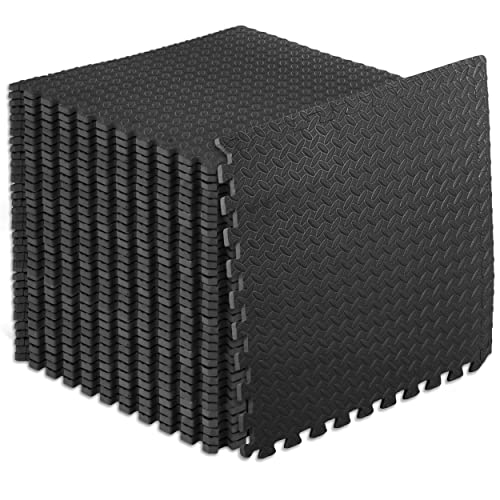
For larger spaces, the 144-square-foot ProsourceFit set expands the same 24″ by 24″ tile format to create a nearly seamless floor within a home gym or activity area. The 1/2-inch EVA foam provides substantial cushioning for workouts and drops, while its water resistance helps with easy maintenance. The design focuses on versatility—suitable for equipment like treadmills and weights, and also functional as a kids’ play mat. Colors and textures may vary by production batch, but the interlocking system remains simple to assemble and disassemble.
Material safety and performance are highlighted, with no toxic phthalates. The mat’s underfoot feel supports a variety of exercises from cardio routines to floor-based stretching. If you expect heavy equipment, ensure the layout includes stabilizing support in high-traffic zones and consider creating a broader perimeter with additional tiles for a balanced surface.
bemaxx Gym Mats Set — 18 Pieces

The bemaxx 18-piece set uses a dual-layer EVA foam structure with an anti-slip surface and a rubber-like feel on top. This configuration is designed to bear heavier equipment while reducing noise and vibrations during exercise. The tiles connect securely, creating a protective floor that resists dents, scratches, and moisture. The set is BPA-free and emphasizes durability, with edge pieces available to complete a tight, professional-looking installation. This option is well-suited for people seeking a thicker, more robust mat for a busy home gym or playroom.
Potential considerations include the weight and size of the interlocking pieces, which impact transport and storage. While the top layer provides grip and comfort, ensure the chosen color and finish complements your space and that maintenance products are compatible with the mat surface to maintain its longevity.
SUPERJARE 0.4″ Thick Mats — 24 Pcs

The SUPERJARE 0.4-inch thick mats combine a high-density EVA foam base with a rubber top for added durability and grip. The dual-layer construction supports heavy exercise equipment and often avoids the rubber odor found in other mats. The surface provides strong traction while remaining cushioned for lifts and plyometrics. The design emphasizes quiet operation, reducing impact noise and vibrations in shared living spaces. This option suits users needing a balance of protection, stability, and a more finished surface in home gyms or multi-use spaces.
Installation is straightforward, though the rubber top adds a little weight per tile. If you anticipate frequent reconfiguration, consider a layout plan and labeling system to streamline future changes. Regular cleaning with mild detergents is recommended to preserve the surface texture and grip.
Art3d Eva Puzzle Mats — 6 Tiles

The Art3d set provides a practical solution with six tiles covering 24 square feet, each tile measuring 24″ by 24″ with a 1/2-inch thickness. The mats offer reliable cushioning for daily workouts and are designed for durability under regular use. They are straightforward to wipe down after workouts, aiding in quick turnover in busy home gym environments. This product is suitable for users who want a simple, standard-sized layout with easy maintenance and a clean, uniform appearance.
Consider the intended room: Art3d mats are a solid fit for medium-size workout zones or for combining with additional mats to extend coverage. The interlocking puzzle edges help maintain a tidy surface, and the tiles are widely compatible with other interlocking systems if you’re expanding an existing setup.
Buying Guide: Key Considerations For Interlocking Gym Mats
- Material and thickness: Most mats use EVA foam. Thicker tiles (like 1/2 inch or more) provide better impact absorption, while thinner options are lighter and easier to transport. For heavy weights, dual-layer designs with a rubber top can offer added durability and grip.
- Size and coverage: Calculate floor area to determine how many tiles you need. Larger tile counts can reduce seams and provide a more uniform surface, but require more storage when not in use.
- Grip and texture: Look for non-slip surfaces to reduce slipping during workouts. Textured finishes help with traction, especially on smoother floors like tile or hardwood.
- Maintenance and cleaning: Water-resistant surfaces simplify hygiene. Check for easy-wipe materials and compatibility with common cleaners. Avoid tiles that demand special solutions that complicate routine cleaning.
- Durability and weight capacity: Dual-layer mats with a rubber top are typically better for equipment-heavy spaces. Assess whether the mat can withstand frequent dropping or rolling of equipment without tearing or deforming.
- Installation and storage: Interlocking edges make setup quick, but some sets include edge pieces for clean borders. Consider how easily tiles can be disassembled and stored when not in use.
- Safety and materials: Prefer mats free from toxic substances such as phthalates. Look for BPA-free options when available and verify that materials are appropriate for use around children and pets.
- Environment and room use: For basements or garages, water resistance and mold resistance are beneficial. If the space doubles as a play area, ensure a balance of cushioning and easy cleaning in the chosen design.
Overall, selecting interlocking gym mats involves balancing protection, durability, and practicality. For compact spaces, smaller tile counts with a tight join minimize gaps and create a consistent surface. For larger gyms or multi-purpose rooms, a higher tile count and thicker construction, possibly with a rubber Top layer, provide enhanced support and longer life under equipment. Consider your room layout, equipment load, and maintenance preferences to determine the best combination of thickness, material, and tile count.