Athletes seeking faster recovery and improved circulation can benefit from full-leg compression systems. This article highlights top leg compression machines designed for athletes, runners, and active professionals. Each option uses sequential or wave-like air-pressure to support circulation, reduce fatigue, and speed up recovery after workouts. Read on to compare features and find the best fit for training, gym use, or home recovery.
| Product | Brand | Key Benefit | Chamber Coverage |
|---|---|---|---|
| QUINEAR Air Compression Recovery System | QUINEAR | Professional sequential massage for full-leg coverage | Foot, lower calf, upper calf, thigh |
| Musugy Sequential Air Compression Recovery System | Musugy | Adaptive pressure with 5 chambers and auto-balancing | Foot, lower calf, upper calf, knees, thighs |
| Yopast Air Compression Leg Massager | Yopast | Rhythmic wave-massage with sensors for personal fit | Foot to thigh |
| Nekteck Leg Compression Massager | Nekteck | Two modes, three intensities; user-friendly handheld control | Calf to foot |
| JZBRAIN Air Compression Leg Recovery Boots | JZBRAIN | Heat option with 11 intensities and 6 modes | Foot to thigh |
QUINEAR Air Compression Recovery System

QUINEAR’s full-leg massager uses air compression therapy to inflate and deflate four chambers (foot, lower calf, upper calf, thigh) in sequence. The device aims to improve blood circulation and metabolism while delivering a comfortable distal-to-proximal squeeze. It features built-in pressure sensors that adjust to leg size, ensuring even compression across all zones. With 8 intensities, 3 modes (sequence, circulation, combination), and adjustable timers (20/25/30 minutes), this system provides customizable therapy without heat controls. Suitable for athletes seeking structured recovery sessions at home or in the gym.
Musugy Sequential Air Compression Recovery System

The MUSUGY system uses five air chambers (foot, lower calf, upper calf, knees, thighs) arranged for sequential inflation and deflation to mimic natural muscle motion. A built-in pressure sensor continuously reads leg circumference and back-pressure, auto-balancing air output for uniform compression across zones. It offers 9 pressure levels (40–120 mmHg), 6 programs including full-leg modes and zone-focused modes, and session durations of 15/20/25 minutes. The device is designed for daily recovery at home, at the gym, or in the office, providing adaptive, safe compression for varying leg shapes.
Yopast Air Compression Leg Massager

Yopast offers a professional-grade leg massager with four independent airbags that inflate and deflate in a rhythmic wave. The system targets the feet, calves, knees, and thighs, mirroring professional massage techniques to promote circulation, metabolic support, and relief from muscle stiffness after exercise. The device adapts to different leg shapes automatically via built-in pressure sensors, providing a personalized massage without manual heat controls. It’s positioned for athletes seeking a versatile recovery tool for post-training routines or long days on their feet.
Nekteck Leg Compression Massager
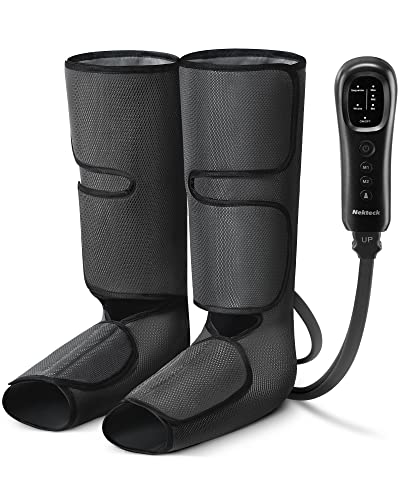
Nekteck’s leg massager focuses on calf-to-foot compression with two modes and three intensity levels. The device includes a handheld controller for easy operation and a design intended to help relieve fatigue, improve circulation, and support leg recovery. While compact, it aims to deliver effective pressure and customizable experience for athletes needing targeted relief after training or long standing sessions, with safety considerations and straightforward use.
JZBRAIN Air Compression Leg Recovery Boots

JZBRAIN’s full-leg massager provides a sequential compression system across five air chambers (foot to thigh) with 11 intensity levels and 6 modes. It also includes a heat function with three levels, enabling combined warmth and compression for enhanced relaxation and circulation. The smart adaptive pressure sensor adjusts to leg size in real time, delivering a personalized recovery experience. This makes it suitable for athletes who value both compression therapy and heat-assisted muscle relaxation in a single device.
Buying Guide: Key Purchase Considerations
Choosing a leg compression machine involves evaluating how the device will fit into training, travel, and daily recovery routines. Consider the following perspectives to determine the best option for you.
- Coverage and chamber design: Full-leg systems with five or more chambers (foot to thigh) provide more comprehensive pressure while adaptive sensors prevent over-inflation. If you frequently train legs or have longer recovery sessions, prioritize wider coverage and sequential inflation.
- Pressure range and modes: Look for a device offering multiple pressure levels (often 40–120 mmHg) and several modes (full-leg, zone-specific, or cyclical). This allows tailoring sessions for post-workout recovery, edema reduction, or fatigue relief.
- Smart sensing and sizing: Built-in sensors that auto-adjust to leg size improve comfort and safety. Devices with customizable timers (15–30 minutes) help fit recovery into busy schedules.
- Heat therapy options: Some models include heat as a complementary feature. If warmth aids your recovery, ensure heat levels are adjustable and independently controllable from compression.
- Portability and setup: For athletes who travel, consider weight, portability, and ease of use. Quick boot-on, quick-off designs with concise setups are advantageous on the road.
- Durability and warranty: Check build quality, materials, and manufacturer warranty. Regular use in sports may demand higher durability and more responsive customer support.
- Safety and medical considerations: Individuals with clotting disorders, severe vein issues, or recent injuries should consult a clinician before use. Auto-shutoff features are beneficial for safe, unattended sessions.
- Value and compatibility: Compare features against price and determine whether a device’s capabilities align with your recovery goals. Some models integrate well with gym routines or home setups, while others are best for travel or office use.
Overall, the best leg compression machine for an athlete balances coverage, adjustable pressure, intuitive controls, and a design that suits daily recovery needs. Evaluating products by chamber count, sensor technology, and available modes helps ensure an effective, comfortable experience that complements training goals.