Pull up bands offer scalable resistance for strength training, mobility work, and physical therapy. This guide highlights five top-rated bands that cover a range of resistance levels, materials, and comfort features. Whether you are building upper-body strength, improving form, or recovering from an injury, these options provide durable performance and versatile use in home gyms or therapeutic settings.
| Product | Brand | Resistance Range | Key Use |
|---|---|---|---|
| HAPBEAR Pull Up Assistance Bands | HAPBEAR | 5–125 lbs | Pull-ups, full-body training |
| Alllvocles Resistance Band Set | Alllvocles | 5–100 lbs (4 bands) | Versatile workouts, assisted pulls |
| HOXWC Pull Up Assistance Bands | HOXWC | 75–225 lbs (3 bands) | Progressive pull-ups, upper-body work |
| RitFit Pull Up Assist Band | RitFit | To 100 lbs (pink option shown) | Whole-body conditioning and mobility |
| Ayombo Pull Up Assistance Bands | Ayombo | 75–300 lbs (4 bands) | Strength progression, home gym |
The following sections detail each product, focusing on build quality, resistance options, and how the bands fit into common workouts. All sections maintain a straightforward, objective tone suitable for evaluating equipment used in fitness routines and rehabilitation plans.
HAPBEAR Pull Up Assistance Bands

HAPBEAR offers a multifunctional set designed for pull-ups and broader strength work. The bands are 81 inches long and come in five resistance levels, ranging from yellow to purple—allowing users to add or combine bands for progressive loading. The versatility supports training for arms, back, legs, chest, and core, while also catering to physical therapy, weight loss, and speed-focused drills. The included variety helps users tailor sessions for beginners through advanced athletes without needing multiple individual devices.
Alllvocles Resistance Band Set

This set includes four pull-up bands made from 100% natural rubber, designed to resist snapping and deliver durability during repeated stretches. Colors denote resistance levels from light to heavy: Yellow (5–10 lbs), Red (15–30 lbs), Black (30–60 lbs), and Purple (60–100 lbs). The bands are 81 inches long, enabling single-band or stacked use for increasing tension. They suit a wide range of exercises that target arms, shoulders, chest, glutes, and legs, making them a flexible option for both home workouts and rehabilitation programs.
HOXWC Pull Up Assistance Bands

HOXWC’s kit features three heavy-duty bands with a combined resistance range that supports gradual progression from beginner to advanced pull-ups. The design includes a comfortable double footrest to promote proper form and reduce training risk, a key consideration for beginners and rehabilitation-focused users. The bands assist multiple upper-body movements, including back, shoulders, chest, and arms, while also engaging core and leg muscles as part of comprehensive workouts. This versatility supports progressive overload and safer pull-up training over time.
RitFit Pull Up Assist Band
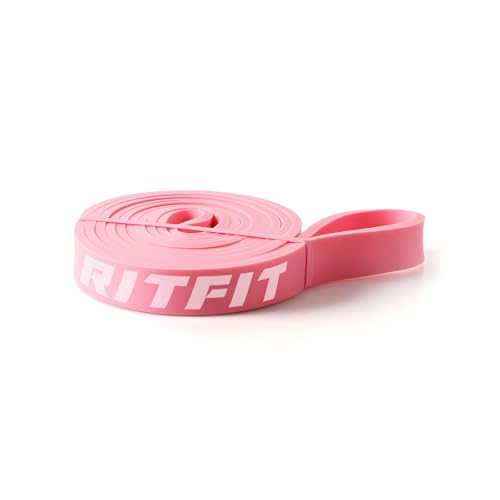
RitFit presents a premium option noted for its eco-friendly natural latex construction. The set supports whole-body workouts by targeting core, back, chest, shoulders, biceps, and triceps, with an emphasis on versatility for chin-ups, pull-ups, and resistance training. Its design focuses on durability and consistent performance, making it a strong choice for users seeking reliable long-term use in both fitness routines and therapy contexts. The product is suitable for a broad range of exercises that blend strength, endurance, and mobility objectives.
Ayombo Pull Up Assistance Bands
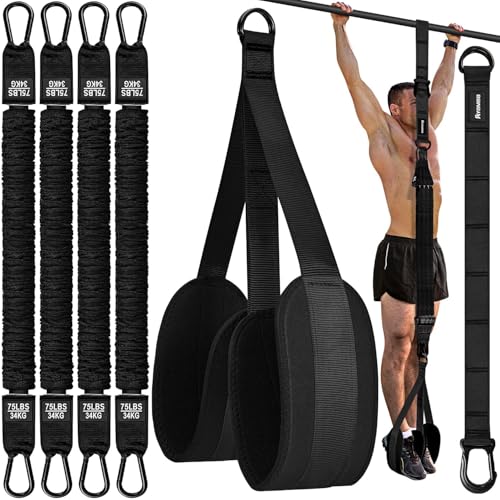
Ayombo provides a four-band system with a broad resistance spectrum (75–300 lbs). The bands use high-grade natural rubber for durability and sustained elasticity, enabling progressive strength gains for both beginners and experienced athletes. The configuration supports gradual pull-up progression and adds versatility for upper-body and core training. Users can mix and match bands to tailor resistance for pull-ups, presses, and various mobility drills, making it a practical option for a compact home gym setup.
Buying Guide
When choosing pull up bands, consider: resistance range and progression, band material and durability, length and compatibility with your fitness space, comfort features (footrests, handles, or door anchors), and the variety of exercises supported. Some bands are sold as sets with multiple weights to enable gradual progression, while others offer a single-band approach with stacking options. For rehabilitation or mobility work, select bands with smooth edges and stable tension to minimize risk of skin irritation or ligament strain. Material quality, especially natural latex versus synthetic blends, impacts odor, elasticity, and longevity. Finally, verify that the product includes secure handling for door anchors, ankle or foot attachments, and sufficient cushioning to support comfortable use during longer sessions.
In terms of workout philosophy, bands with clear progression options help users advance safely. Progressive overload can be achieved by adding more bands, using bands in combination with bodyweight exercises, or performing tempo variations to increase time under tension. For rehab and therapy, bands that offer consistent tension and comfortable support during challenging positions are particularly important. When integrating into a routine, pair pull up bands with a balanced regimen that also includes mobility, core strengthening, and antagonist muscle work to maintain muscular balance. Consistency and proper form remain the most reliable predictors of progress, regardless of the exact tool chosen.
Overall, the five featured products provide a spectrum of resistance, durability, and usability suited to American home gyms and clinical settings. Each option supports scalable intensity, enabling careful progression for users at varying levels of strength and rehabilitation needs.