Triathlon competitors rely on race belts to keep numbers secure, nutrition accessible, and race-day pace steady. This guide reviews five leading belt options, highlighting comfort, adjustability, and storage features. Whether you need gel loops, phone pockets, or ultra-light reassurance during transitions, these belts are designed to minimize bounce and maximize focus.
The table below summarizes each selected product to help you compare quickly:
| Product | Brand | Notable Feature | URL |
|---|---|---|---|
| RJ-Sport Triathlon Belt with Pouch | RJ-Sport | Pouch, 6 gel loops, adjustable waist 30″–38″ | Amazon |
| VeloChampion Lightweight Running Belt | VeloChampion | No pins, 3 sizes, minimal bounce | Amazon |
| RJ-Sport Race Number Belt | RJ-Sport | 6 gel loops, adjustable waist 28″–39″ | Amazon |
| JOVITEC 2 Pieces Race Number Belt | JOVITEC | 2 pieces, 6 gel loops per belt, reflective squares | Amazon |
| Azarxis Adjustable Elastic Triathlon Belt | Azarxis | 6 gel loops, adjustable, reflective patches | Amazon |
Below, each option is explored with its key strengths, helping you decide which belt best fits your race-day kit and transition flow.
RJ-Sport Triathlon Belt With Pouch

The RJ-Sport Triathlon Belt with Pouch offers a comfortable waist-fit designed to avoid bulk during runs and rides. It includes a pouch for essentials and six gel/energy loops to support fueling. The belt is adjustable for waists from 30″ to 38″ and aims to secure the bib without causing shirt holes, thanks to pins being unnecessary. The soft, elastic band conforms to different body sizes, helping maintain a stable race-number position while you focus on pace and transitions. The balance of storage and slim design makes it a versatile option for sprint to iron-distance events.
VeloChampion Lightweight Running Belt

This VeloChampion belt emphasizes a minimal-bounce experience with an elasticated fit and a lightweight build. Available in three sizes, it’s designed to accommodate athletes across a wide range of body types. The belt allows quick race-number setup by sliding the event number onto elastic cords and securing with toggles—no tools required. This model is suited for runners, triathletes, and cyclists who value a secure bib without the bulk or pinning, helping to reduce distractions during tough segments.
RJ-Sport Race Number Belt

RJ-Sport’s Race Number Belt focuses on eliminating shirt damage by using a bib attachment system without holes. It offers a soft, elastic, and adjustable waistband suitable for waists from 28″ to 39″. The belt’s construction emphasizes comfort and durability for sustained wear across training and race-day use. With a clean, form-fitting profile, this belt keeps your number visible and secure, while its fabric composition supports breathability and reduced friction during movement.
JOVITEC 2 Pieces Race Number Belt
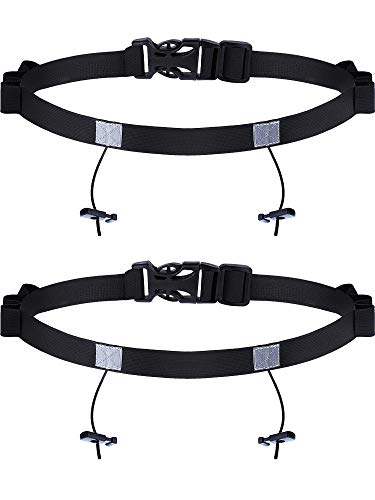
JOVITEC’s set includes two belts featuring six gel loops per belt, enabling athletes to carry nutrition without interrupting their pace. The design adds reflective squares to improve visibility in low-light conditions, and adjustable toggles allow bib position changes for a secure fit. The universal elastic fit accommodates both men and women, making it a flexible choice for a variety of triathlon and running configurations. The two-pack design is ideal for training partners who want identical gear or budget-conscious racers seeking redundancy.
Azarxis Adjustable Elastic Triathlon Belt

Azarxis offers an adjustable elastic belt designed for a broad waist range (75–140 cm / 29.5–55.1 inches) and six gel loops for on-the-go nutrition. The belt emphasizes a snug fit and form-fitting comfort, using lightweight materials to minimize bulk. Reflective patches enhance visibility during early morning or late-evening workouts, contributing to safety while racing or training. The design supports rapid bib changes and a secure hold on nutrition, which can be valuable in longer events where fueling is critical.
Buying Guide
Key purchase considerations help ensure you select a race belt that matches your triathlon goals and body type:
- Adjustability and fit: Look for belts with wide waist size ranges and secure, comfortable closures to accommodate gains or weight fluctuations during training cycles.
- Storage and accessibility: Evaluate gel loops, bib holders, and pocket space. Decide if you need multiple gel slots, a phone pocket, or a compact pouch for nutrition and keys.
- Stability and bounce: Prioritize belts engineered to minimize movement during running and transitions. Lightweight materials and elastic construction reduce bounce.
- Durability and comfort: Consider fabric quality, seams, and edge finishing. Neoprene or soft polyester blends often balance comfort with breathability.
- Visibility and safety: Reflective elements improve visibility in low-light conditions, which can be important for early morning or evening training sessions.
- Ease of use: Quick setup for bibs and nutrition reduces race-day time spent adjusting gear. Toggles and elastic cords often offer tool-free adjustments.
- Value for money: If you race often, a reliable belt with multiple gel loops and a robust fit may provide better long-term value than cheaper alternatives.