People with outward foot rotation often experience knee, ankle, or hip discomfort due to uneven weight distribution. The following five Amazon-influenced products focus on medial and lateral heel wedges, arch support, and metatarsal relief to help realign posture and reduce strain. The selections emphasize ease of use, comfort, and durable materials designed for all-day wear. Use them in combination with proper footwear to support healthier gait patterns.
| Product | Brand | Key Benefit |
|---|---|---|
| Dr. Foot’s Supination & Over-Pronation Corrective Shoe Inserts | Dr Foot | Medial and lateral heel wedges for correct alignment |
| 4 Pairs Orthopedic Insoles for Men and Women | Booyckiy | Dual wedges for pronation and supination control |
| Plantar Fasciitis Insoles for Men Women | WALK•HERO | Deep heel cup and arch support for flat feet |
| CRUVHEAL Plantar Fasciitis High Arch Insoles | CRUVHEAL | High arch support with durable construction |
| BraceAbility Medial & Lateral Heel Wedge Insoles | BraceAbility | Pair of inserts with 4-degree medical lift |
Dr. Foot Supination & Over-Pronation Corrective Inserts

The Dr. Foot inserts provide both medial and lateral heel wedges to address a range of misalignments including genu valgum (knock knees) and genu varum (bow legs). The design supports inward pronation and outward supination, making them suitable for people who experience knee and ankle discomfort related to uneven foot alignment. Made from a quality foam with a sweat-wicking, anti-slip top layer, these insoles stay in place thanks to a strong self-adhesive backing and can be trimmed to fit. Use them for all-day wear, whether standing or walking, to help balance your stride and reduce postural stress.
Booyckiy 4 Pairs Orthopedic Insoles
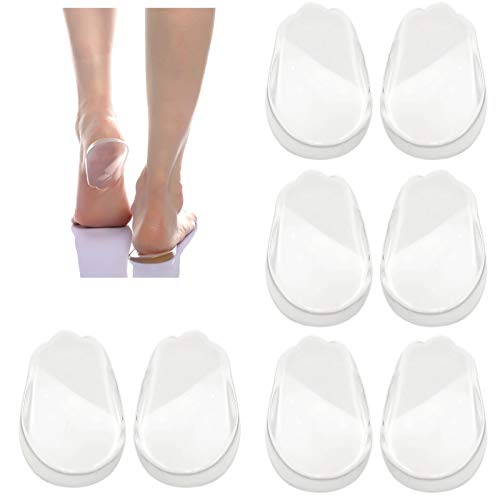
These insoles come as a set of four pairs with dual medial and lateral heel wedges to counteract both overpronation and excessive supination. The ergonomic design supports everyday activities—from standing to running—while addressing peroneal tendon inflammation and arthritis. They’re made from soft, sturdy PU gel and feature a self-adhesive backing that’s washable and reusable, allowing for repositioning and trimming to fit different shoes. The kit’s versatility makes it suitable for both men and women seeking targeted correction without bulk.
WALK•HERO Plantar Fasciitis Insoles
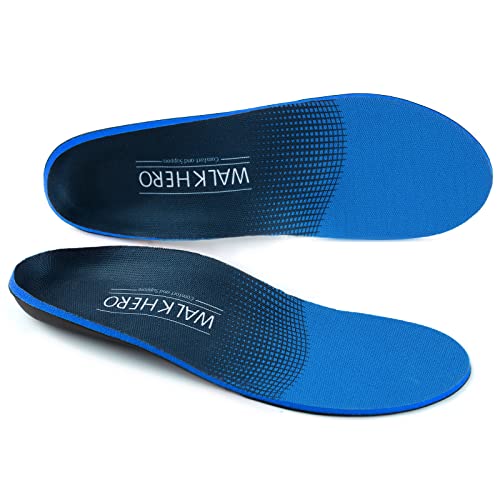
Designed for both men and women, these insoles focus on arch support and a deep heel cup to stabilize the foot during heel strike. They help align the foot’s biomechanics to reduce stress from flat feet, pronation, and plantar fasciitis symptoms. The premium EVA material provides shock absorption and is paired with a breathable fabric to keep feet cooler during long wear sessions. This combination aims to improve overall comfort, gait efficiency, and endurance for everyday activities.
CRUVHEAL 220+ Lbs Plantar Fasciitis Insoles

CRUVHEAL insoles are built for higher weight bearing users, offering a 1.4-inch arch support to distribute weight evenly and reduce plantar fascia stress. The high-arch profile helps stabilize and maintain foot alignment during movement. They’re designed to hold their shape under heavier loads, delivering ongoing support for daily activities, work, or sport. Availability in various sizes makes it easier to find a proper fit for most adults seeking relief from heel pain and related issues.
NEPPT Orthopedic Insoles Kit

The NEPPT kit includes two pairs focused on correcting either valgus (outward roll) or varus (inward roll) conditions with a self-adhesive backing for secure placement. These supports work to alleviate knee pain associated with knock-knees and bow-legs by supporting both medial and lateral aspects of the heel and arch. The lightweight silicone construction ensures a low profile and compatibility with most casual and athletic footwear, enabling flexible use across daily routines.
BraceAbility Medial & Lateral Heel Wedge Insoles
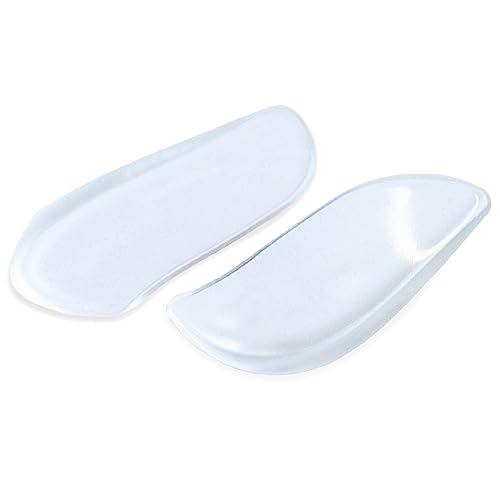
This pair-based set targets a wide range of foot misalignments, offering a universal size that fits most adults. The inserts provide a 4-degree medical lift on one edge to address ankle inversion or eversion, supporting conditions such as flat feet, plantar fasciitis, and Achilles tendonitis. The design prioritizes all-day wear, enabling consistent use across standing, walking, or light running to help reduce discomfort linked to uneven gait.
Buying Guide: Key Purchase Considerations
Choosing the right insoles and wedges depends on your specific alignment issue, activity level, and shoe type. Consider the following factors to make an informed decision:
- Foot condition and goals: Identify whether you primarily need to correct pronation (inward roll), supination (outward roll), or a combination, as well as any supporting problems like plantar fasciitis or flat feet.
- Wedge placement and height: Medial wedges address inward roll; lateral wedges address outward roll. Heavier correction often requires a higher wedge, but start with moderate lifts to avoid discomfort.
- Material and durability: Foam, PU gel, and EVA blends impact cushioning, breathability, and long-term support. Self-adhesive backing helps with placement but may require periodic replacement.
- Fit and sizing: Ensure the insoles fit your shoe size and are trim-to-fit when needed. Some products are designed as universal or multi-pack options for versatility.
- Compatibility with footwear: Casual sneakers, dress shoes, work boots, and running shoes have different insole demands. Confirm compatibility before purchasing.
- Maintenance: Look for washable components that maintain hygiene and extend reuse. Check for odor control and moisture-wicking properties if you’re active.
- Ease of use: Repositioning capability can be important for adjusting fit without removing the entire insole, especially on the go.
Performance considerations include how well the inserts integrate with daily routines, the level of stability they provide during walking or running, and the potential impact on posture and knee alignment. For those with acute pain or injury, consulting a healthcare professional is prudent before adopting corrective insoles as a long-term solution. The options listed here offer varying degrees of correction, cushioning, and durability to support a balanced gait and reduce discomfort associated with outward foot rotation.