Starting out on a snowboard should be about safety, confidence, and fun. This guide highlights beginner-friendly boards that balance durability, ease of use, and value. Each product below is selected for younger riders or adults new to the sport, featuring forgiving construction and simple setups. Read on to compare key options and learn what to look for when choosing a first snowboard.
Kids aged 4–12 and beginner riders
| Product | Key Benefit | Ideal For |
|---|---|---|
| The Original Geospace Sledsterz Kids Beginner Snowboard (Red) | Low-cost entry with easy hop-on binding design | |
| The Original Geospace Sledsterz Kids Beginner Snowboard (Black/Red Bindings) | Adjustable bindings for growing riders | Young beginners seeking quick setup |
| Flexible Flyer 51 Inch Wood Snowboard | Lightweight engineered wood for backyard practice | Youth riders learning balance at home |
| Sportsstuff Snow Ryder Hardwood Snowboard (110 cm) | Durable hardwood construction for long-lasting use | Beginners entering slopes and backyards |
| 5th Element Afterglow Snowboard (Women, Hybrid Rocker) | All-mountain stability with beginner-friendly rocker | Women beginners seeking easy turning |
The Original Geospace Sledsterz Red Beginner Snowboard

The Sledsterz Red model is designed for cost-conscious families seeking a fast, forgiving ride. It emphasizes quick starts with bindings that install from the underside, letting kids hop on and strap in with minimal fuss. The design focuses on enabling confident turns and bumps on neighborhood hills, ideal for beginner riders exploring their first few days on snow.
Geospace Sledsterz Black Bindings Snowboard

This version adds adjustable step-in bindings, helping young riders grow with the board. The underboard binding system remains simple enough for beginners to grasp, while offering a steadier grip as confidence builds on the slopes. Regular snow boots or shoes can be used, reducing equipment needs for families just starting out.
Flexible Flyer 51 Inch Wood Snowboard
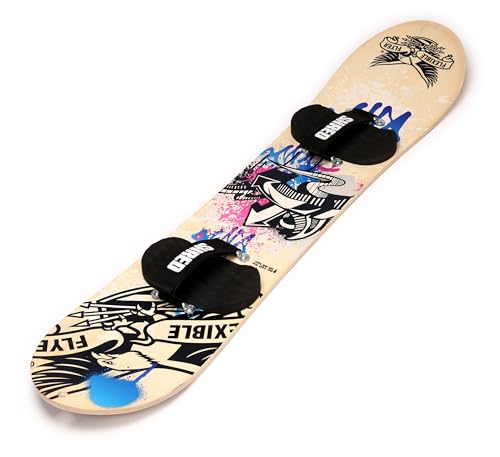
The Flexible Flyer board uses engineered wood to deliver a lightweight yet sturdy snowboard for kids. Its longer 51-inch size supports beginners learning on backyard slopes and driveways. This option prioritizes balance practice and basic turning without requiring resort infrastructure, making it ideal for home-based learning and confidence building.
Sportsstuff Snow Ryder Hardwood Snowboard (110 cm)

With a 110 cm length, this hardwood snowboard is sized for riders in the beginner range (roughly 40–140 lbs). It provides durable performance for entry-level cruising and backyard sessions. The hardwood construction supports repeated use, helping new riders practice balance, stance, and steering on varied snow surfaces.
5th Element Afterglow Snowboard For Women

This women-specific board features a hybrid rocker design intended for all-mountain stability, making it accessible for beginners while offering enough control for intermediate progression. The textured topsheet adds durability against knicks and chipping, helping maintain performance as skills grow on diverse terrain.
Buying Guide: Key Purchase Considerations
When selecting a snowboard for a beginner, consider the rider’s height and weight to determine appropriate length. Beginners typically benefit from boards that are forgiving, with rocker or hybrid rocker profiles that reduce catchiness and make turning easier. Binding ease and compatibility with regular boots can lower setup friction, especially for younger riders. Durable construction, such as hardwood or engineered wood, helps withstand frequent use on backyard hills and slopes. For adults new to riding, look for boards labeled beginner-friendly, with a stable shape and a soft flex to ease into balance and control. If shopping for a child, prioritize adjustable bindings or sizes that accommodate growth over several seasons. Always verify safety gear compatibility, such as helmet and wrist guards, to support a confident learning progression. Compare boards by size, weight rating, and the presence of beginner-oriented features like easy-entry bindings and forgiving edges.
From a performance perspective, consider whether you want a board primarily for backyard practice or for progression on gentle slopes at a resort. Backyard boards tend to emphasize length and stability, while resort-oriented boards may incorporate more nuanced edge control and flex characteristics. Budget-conscious buyers can find solid beginner options across inexpensive wooden boards and entry-level composite designs. For those planning to grow with the sport, boards with adjustable bindings and scalable lengths can yield longer-term value. Finally, read user reviews to assess real-world ease of use and durability beyond product specs.