For solo anglers, a well-chosen fishing canoe or kayak can transform days on lakes, rivers, and coastal waterways. This guide highlights top solo craft designed for stability, gear access, and efficient propulsion. Each entry includes a quick look at key features to help you compare craft that pair well with a single-person fishing setup.
| Product | Brand | Notable Features |
|---|---|---|
| Old Town Sportsman Discovery Solo 119 | Old Town | Open hull, ample rod holders, tackle box, padded armrests |
| Perception Sound 9.5 Fishing Kayak | Perception | Built-in dashboard, solo mounting recesses, ergonomic Zone seat |
| Brooklyn 10.5 Pro Motorized Fishing Single Kayak (BKC) | BKC | Trolling motor, gear tracks, wide stable hull |
| Brooklyn 9.2 Sit-On-Top Single Fishing Kayak | BKC | Lightweight, built-in rod holders, accessory rails |
| NRS 3D Long Solo Canoe Float-G-L | NRS | Versatile bow/stern fit, durable material |
Old Town Sportsman Discovery Solo 119 Fishing Canoe

The Old Town Sportsman Discovery Solo 119 is designed for a grab-and-go fishing experience. Its solo-friendly footprint combines kayak-like agility with a canoe’s open, spacious hull. This model emphasizes practical fishing features, including padded armrests with trays, customizable accessory tracks, a dedicated tackle box, and ample rod holders. It balances stability with easy handling, making it suitable for anglers who want room for gear crates, decoys, camping gear, or a canine companion aboard.
Key considerations include its weight capacity and deck layout for gear organization, as well as how the hull responds under varying water conditions. The design prioritizes quick setup and reliable stability for one angler, which is ideal for solo missions where mobility matters as much as fishing access.
Perception Sound 9.5 Fishing Kayak

The Perception Sound 9.5 is a sit-inside kayak designed for stability and fishing readiness. It includes a molded-in dashboard and solo mount recesses to streamline gear storage and accessorizing. The Zone seating system provides ergonomic comfort for long casts, with an adjustable backrest to support extended sessions. Front and rear carry handles aid transport and security, making this model a practical option for solo anglers who want a compact, stable platform with integrated gear management.
Brooklyn 10.5 Pro Motorized Fishing Single Kayak (BKC)

The Brooklyn 10.5 Pro from BKC is a powered solution for serious solo fishing. It comes with a trolling motor for hands-free propulsion, enabling anglers to cover more water, hold position while casting, or navigate challenging currents. The hull emphasizes stability for standing or reeling in larger catches, while built-in flush-mounted rod holders, gear tracks, and a rear cargo area keep gear accessible and organized. This craft suits anglers who want long-range reach without sacrificing balance.
Brooklyn 9.2 Sit-On-Top Single Fishing Kayak

Brooklyn’s 9.2 Sit-On-Top is a versatile solo fishing kayak built for stability and easy handling. Its wide beam provides dependable balance for casting, reeling, and relaxed paddling. The model includes integrated fishing-ready features such as flush-mount and articulating rod holders, as well as accessory rails and paddle parks for hands-free convenience. It’s a practical option for beginners and experienced anglers seeking a light, accessible solo platform.
NRS 3D Long Solo Canoe Float-G-L

The NRS 3D Long Solo Canoe Float-G-L offers a versatile option for solo use, with a design that works for bow or stern applications in a range of water conditions. Constructed from durable polyurethane-coated nylon, it measures 57 inches long by 38 inches wide with a 24-inch depth, and includes a 10.75-inch inflation tube. This craft emphasizes compatibility with various paddling setups and provides a reliable elongation for solo adventures that require flexibility in gear arrangement.
Brooklyn 10.5 Pro Motorized Fishing Single Kayak (Alternative)
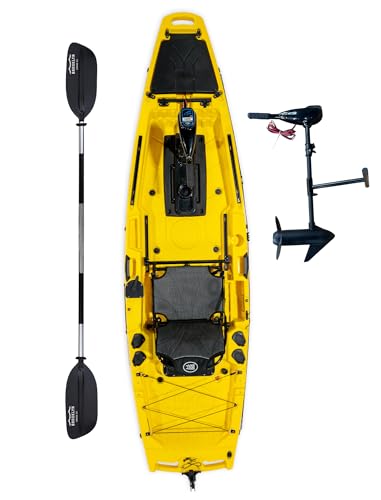
Note: This entry mirrors the motorized, solo-fishing emphasis seen in the primary Brooklyn 10.5 Pro profile above. It underscores the value of a stable, angler-ready hull, with built-in mounts and a propulsion system to extend the reach of solo outings. Consider how a trolling motor integrates with your typical waterway and preferred fishing style when evaluating this option.
Buying Guide
Hull stability and seating
Stability is essential for solo fishing, especially when standing or reeling. Look for wide beams, stable flats, and comfortable seating. Ergonomic seats with adjustable backrests reduce fatigue and improve casting precision over long sessions.
Gear access and customization
Assess the availability of rod holders, gear tracks, flush-mounted compartments, and accessory rails. A well-organized deck with easy access to tackle boxes, nets, and paddling gear speeds up decisions on the water.
Propulsion options
Single-paddle setups work well for calm water and quiet environments. If you fish larger or windier venues, a trolling motor or powered option can help you cover more water and maintain position with less effort. Consider weight, battery life, and mounting compatibility when choosing motorized models.
Portability and storage
Solo crafts should strike a balance between interior space and transportability. Check weight, carrying handles, and how the craft fits in your vehicle or rack system. Storage space for gear and cold-weather gear is a practical advantage for longer trips.
Durability and materials
Durable hull materials resist wear from rocks, docks, and debris. Nylon, polyethylene, and composite materials each have trade-offs in weight and stiffness. For frequent use, prioritize models with reinforced decks and impact-resistant surfaces.
Water conditions and intended use
Evaluate whether you’ll be paddling lakes, rivers, or coastal zones. Calm-water designs may excel in lakes, while open-water or river-dedicated hulls offer handling features that mitigate current and wind. Your typical excursion length and required equipment influence the best fit.
ACCESSORY ecosystem
Check for compatibility with accessories like anchor systems, nets, fish-finders, and storage boxes. A robust accessory ecosystem helps you extend your setup beyond basic paddling and improves on-water efficiency.