For migratory flights, backyard feeders, and distant songbirds, a reliable spotting scope can transform your birding sessions. This article highlights five strong options that balance magnification, light transmission, weather resistance, and portability. Each product is selected for bird watching enthusiasts who want crisp images, wide fields of view, and dependable performance in the field. Read on to compare features, optics, and handling to find the best fit for your outdoor adventures.
| Product | Magnification / Objective | Key Optics | Notable Feature |
|---|---|---|---|
| SVBONY SV28 Spotting Scope | 25-75x70mm | 70mm lens, waterproof, fogproof | Phone adapter included; extendable sunshade |
| Gosky Flagship 25-75×80 | 25-75×80 | BAK4 prism, FMC optics, 80mm lens | Upgraded flagship with reliable performance |
| Gosky 20-60×85 | 20-60×85 | BAK4 Prism, FMC coating, 85mm lens | Full-size tripod included |
| Nexiview 25-75×80 HD | 25-75×80 | BAK4 Prism, high light transmission | 64″ tripod; upgraded phone adapter |
| Gosky DiamondEdge 20-60×80 | 20-60×80 | BAK4, FMC optics | Waterproof, rubber-armored body |
SVBONY SV28 Spotting Scope With Tripod
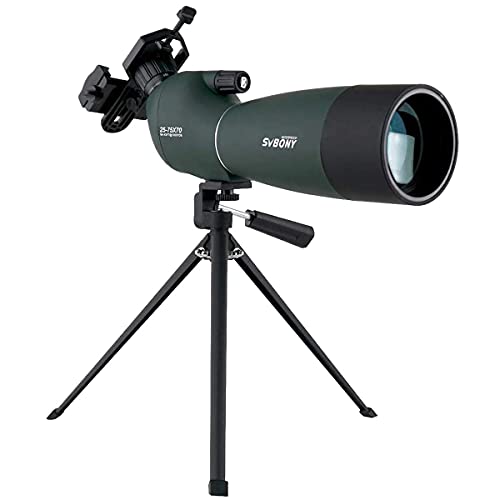
The SV28 offers an accessible entry point for bird watchers with its 25-75x70mm zoom range and a large 70mm objective lens. It provides solid light gathering for its class and includes a phone adapter for easy photography or social sharing. Its waterproof and fogproof construction helps maintain performance in unpredictable field conditions, while a seamless non-slip finish improves grip when wet.
Gosky Flagship 25-75×80 Spotting Scope

This upgraded flagship model balances high-end optics with practical field features. An 80mm objective lens paired with BAK4 prism and FMC coatings yields a broad, bright image with natural colors. The nitrogen-filled and O-ring sealed body ensures reliable performance in rain or humidity, making it a strong choice for year-round birding and wildlife viewing.
Gosky 20-60×85 Spotting Scope

With an 85mm objective lens, this Gosky scope is designed for bright, detailed imagery even in lower light. The 20-60x zoom range supports close observations of distant birds, while a full-size adjustable tripod provides stability across varied terrains. The include carrying bag helps with transport between field sites.
Nexiview 25-75×80 HD Spotting Scope

Featuring a high magnification range and an 80mm objective lens, Nexiview emphasizes light transmission with a BA K4 prism and advanced coatings. The scope includes a sturdy 64-inch tripod and an upgraded phone adapter, supporting stable imaging of birds in varied habitats. Its optical design aims for wider views and clearer edge-to-edge detail for field use.
Gosky DiamondEdge 20-60×80 Spotting Scope

DiamondEdge emphasizes comfort and handling with a waistline-inspired design and anti-slip grip. The 20-60×80 configuration, combined with a durable waterproof and fog-proof build, suits birders who trek through varied weather. The kit typically includes a full-size tripod and phone adapter to help capture long-distance views with steadiness.
Buying Guide
- Magnification vs. Brightness: Higher magnification helps in distant observations but reduces brightness and field of view. Look for scopes with larger objective lenses (70–85mm) and high-quality prisms (BAK4) for better light transmission.
- Optical Coatings: FMC (Fully Multi-Coated) optics improve contrast and color accuracy, especially in dawn or dusk viewing sessions. Coatings can significantly affect image quality in low-light conditions.
- Weather Sealing and Durability: Bird watching often occurs outdoors in unpredictable weather. Nitrogen-filling and O-ring sealing reduce fogging and water ingress, extending scope life in humid or wet environments.
- Tripod and Stability: A sturdy, adjustable tripod is essential for sharp images, particularly at higher magnifications. Check for bubble levels and adaptable heights to match your typical viewing stance.
- Portability vs. Performance: Heavier scopes may offer brighter optics but be less convenient for long hikes. Consider a balanced setup with a compact tripod and a scope around 80mm objective for a good blend of light and portability.
- Phone Adaptors: If you want to photograph birds, ensure the scope includes a reliable phone adapter or consider one compatible with most smartphones for simple, stable imaging.
- User Experience: Smooth zoom and precise focusing are crucial for tracking erratic bird movements. Look for dual-focus or fine-focus mechanisms to capture fast, close-on-target details.
- Budget Considerations: Entry-level scopes deliver solid performance for casual birding, while flagship models emphasize optics and ruggedness. Assess how often you bird-watch and in which environments to determine the best value.
Each listed option above targets bird watchers with distinct priorities—ease of use, optical clarity, ruggedness, or portability. Before purchasing, consider your typical viewing spots, light conditions, and how you plan to photograph or record sightings. The right spotting scope can enhance field observations and deliver crisp, lifelike images of distant birds.