Choosing a stationary bike for rehab means prioritizing low-impact resistance, smooth motion, and comfortable seating. The options below focus on recumbent and under-desk designs that support joint health, gradual intensity, and easy accessibility for seniors and recovery routines. This guide highlights five relevant models, their standout features, and practical buying considerations to help you pick the right bike for rehab goals.
| Product | Brand | Ideal For | Key Benefit |
|---|---|---|---|
| Himaly Mini Exercise Bike, Under Desk Bike Pedal Exerciser | himaly | Arm & leg rehab, desk use | Adjustable resistance and LCD display for trackable progress |
| CURSOR FITNESS Recumbent Exercise Bike | CURSOR FITNESS | Full-body rehab with back support | 16 levels of magnetic resistance with comfortable recumbent seat |
| YOSUDA Under Desk Bike Pedal Exerciser | YOSUDA | Office rehab, light cardio | 16-level magnetic resistance and 3-in-1 design for arms, legs, core |
| XVGVSV Recumbent Exercise Bike for Home Use | XVGVSV | Senior fitness, low-impact cardio | Ergonomic design with adjustable seat and 16-level resistance |
| pooboo Folding Exercise Bike | pooboo | Home gym rehab, compact storage | 4-in-1 functionality with back support and arm resistance bands |
Himaly Mini Exercise Bike for Arm And Leg Rehab

The Himaly under-desk pedal exerciser provides a compact solution for rehab routines targeting both upper and lower body. Its multi-level resistance allows gradual progression, which is important for recovery phases. The device supports arm and leg movements, enabling combined routines that can aid in improving range of motion and muscle endurance without excessive impact. The digital LCD display tracks time, count, calories, and distance, offering a clear way to monitor consistency and progress over weeks of rehab workouts.
Key features include adjustable resistance to suit different rehabilitation stages and joint tolerances, a compact footprint suitable for home and office environments, and a straightforward display that helps users stay in tune with their exercise journey. The device is designed for easy adjustments, making it suitable for seniors and individuals recovering from minor injuries who need a controllable pace.
CURSOR FITNESS Recumbent Exercise Bike

The CURSOR FITNESS recumbent bike emphasizes comfort and stability, making it well-suited for rehab scenarios. Its 16-level magnetic resistance, driven by a precise 11 lb flywheel, provides a wide spectrum of intensity while maintaining smooth, quiet operation. The belt-driven system minimizes noise, which is helpful for home environments and early-morning or late-evening sessions. The extra-cushion breathable saddle offers added support, reducing discomfort during longer rehab sessions and encouraging adherence to therapy plans.
Adjustability is a practical rehab feature: the seat, backrest, and pedals are designed to accommodate a wide range of body sizes (from 4’8″ to 6’5″), with a 7.9-inch seat adjustment and three vertical backrest levels. The 7×2 pedal positions are designed for diverse foot sizes, enabling a comfortable setup for gradual resistance work and post-injury recovery. The overall design focuses on minimizing joint strain while providing stable, controlled cardio options for rehabilitation routines.
YOSUDA Under Desk Bike Pedal Exerciser

The YOSUDA pedal exerciser is engineered for low-impact cardio suitable for rehab activities. Its 16-level magnetic resistance allows users to fine-tune intensity, from gentle motion for joint-friendly routines to more challenging levels for endurance building. The 3-in-1 design enables arm, leg, and core engagement, giving therapists and individuals the flexibility to target multiple muscle groups in a single session. Dual anti-slip features—gripper feet and a non-slip mat—help keep the unit stable on various floor surfaces, reducing the risk of movement during seated workouts.
For rehab users who work from home or in office environments, the compact footprint and quiet operation are practical advantages. The unit supports gradual progression with adjustable resistance while providing a stable base for safe, controlled pedaling. The accessory design encourages frequent use, which can be important in rehab plans that rely on consistent, short-duration sessions rather than longer, high-impact workouts.
XVGVSV Recumbent Exercise Bike For Home Use
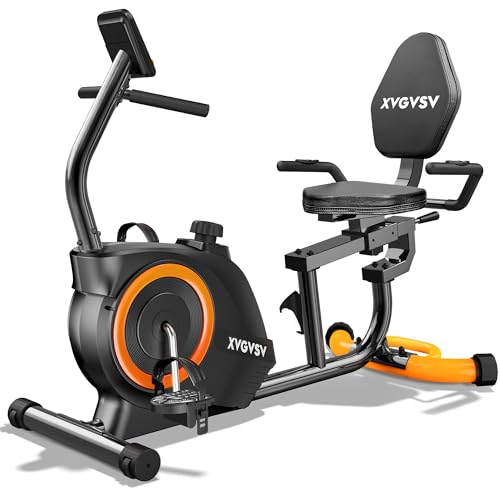
This XVGVSV recumbent bike prioritizes ergonomic support and a simple, forgiving ride—features often favored in rehab settings. The plush padded seat and ergonomic backrest provide comfortable seating for longer sessions, while its 16-level magnetic resistance enables a gradual ramp-up as strength and endurance improve. The bike is built with commercial-grade steel for stability and durability, supporting up to 400 pounds, which adds a safety margin for diverse users. Front transport wheels make repositioning easier in multi-purpose spaces, a practical consideration for homes repurposing rooms for therapy sessions.
The combination of ease of setup, stable operation, and adjustable resistance makes this model a solid option for rehab programs that require low-impact cardio without excessive strain on joints. It is suited for seniors and patients who need a steady, controlled exercise pace as part of a recovery plan.
pooboo Folding Exercise Bike With 4-In-1 Function

The pooboo folding bike offers a versatile rehab-friendly setup with four modes of use, including upright cycling and a semi-recumbent posture that reduces lower-back load. The 8-level adjustable resistance allows precise progression in rehab plans, while the included arm resistance bands support upper-body engagement—helpful for comprehensive endurance and mobility work. A bottle holder ensures hydration during longer sessions, and the compact folding design is advantageous for rooms with limited space. The integrated back support cushion adds comfort for users who need heightened back and posture support during seated workouts.
For rehab contexts, the folding design supports intermittent use across small spaces, and the multiple postures provide options to shift focus between legs and upper body as recovery progresses. The inclusion of pulse sensors can assist with monitoring exertion and ensuring safe exercise intensity during therapy sessions.
Buying Guide: Key Considerations For Rehab-Oriented Purchases
- Joint-friendly mechanics: Look for low-impact resistance, smooth belt-driven or magnetic systems, and seating that minimizes knee, ankle, and hip strain. Recumbent designs often offer more support and reduced joint load for rehab users.
- Adjustability: Seek bikes with a wide range of seat adjustments, backrest options, and multiple pedal positions. Proper fit reduces injury risk and improves exercise comfort during recovery phases.
- Resistance progression: A broad resistance spectrum (eg, 10-16 levels or more) enables gradual progression, essential for rehab programs that gradually increase difficulty as healing occurs.
- Stability and portability: A sturdy frame with a low center of gravity helps prevent tipping or wobble during therapy routines. Front wheels or carrying handles facilitate moving the unit between rooms.
- Quiet operation: Noise can disrupt rehab sessions, especially for early morning routines or shared living spaces. Magnetic resistance systems generally operate more quietly than flywheels with friction.
- Display and tracking: An LCD or integrated monitor that records time, distance, calories, and counts helps users track progress and stay motivated during lengthy rehab periods.
- Foot and hand accessibility: For arm-focused rehab, consider devices that support arm pedaling or can be placed on a desk. Foot straps and non-slip pedals enhance safety and control during seated workouts.
- Weight capacity and durability: Choose models with robust frames and high weight limits to ensure safe use across a range of body types, especially for older adults.
- Ease of assembly and storage: Many rehab users benefit from models that ship partially assembled and fold for storage, enabling quick setup and space-efficient home use.
When selecting a stationary bike for rehab, pairing product features with a rehabilitation plan or therapist’s guidance helps ensure the chosen equipment aligns with specific recovery goals. Each model above offers a distinct approach—from under-desk pedaling to full recumbent comfort—supporting varied rehab needs and living spaces.