Choosing the right tennis racket for a 10-year-old helps develop coordination, technique, and confidence on the court. This guide highlights top beginner-friendly, lightweight youth rackets designed for kids around 80–55 inches tall, focusing on balance, grip comfort, and ease of swing. The selections below are optimized for developing players who are learning proper form and enjoying the game.
| Product | Size | Key Benefit |
|---|---|---|
| HEAD Speed Junior 25 | 25 inch | Lightweight, kids-friendly grip for learning form |
| HEAD Instinct 25 Junior | 25 inch | Head-light balance for comfort and control |
| Wilson Pro Staff Precision Junior 21 | 21 inch | Small-SIZE option with stability features |
| Wilson Pro Staff Precision Junior 23 | 23 inch | Perimeter weighting and power balance |
| Babolat Drive Junior 25 | 25 inch | Kid-friendly handle and comfortable feel |
HEAD Speed Junior 25 Tennis Racket (8-10, Blue)
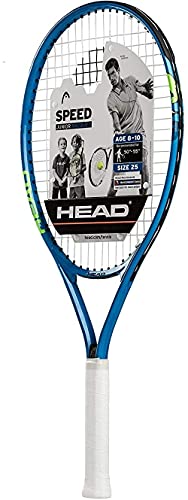
The HEAD Speed Junior 25 is designed for younger players learning coordination and correct technique. Its lightweight aluminum frame supports easy swinging, enabling kids to focus on form rather than effort. The grip is tailored for small hands, helping children maintain a secure hold as they practice swings and get comfortable with the racket’s balance. This model suits kids in the 8–10 age range and stands out for casual play and early skill development.
HEAD Speed Junior 19/2-4 Kids Racket (Green, 19 inch)
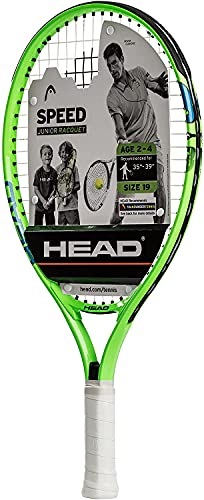
Designed for very young players or beginners, this 19-inch model emphasizes light weight and a kid-friendly grip. While smaller, it mirrors the same learning-focused construction as larger HEAD junior lines, helping younger children build early motor skills and confidence on the court. It’s a good stepping-stone for ages 2–4 or for players transitioning into a more formal young beginner set.
Wilson Pro Staff Precision Junior 21 Tennis Racket

The Wilson Pro Staff Precision Junior 21 is a compact option engineered for durability and control. Its AirLite alloy construction keeps weight low for easier handling, while the perimeter weighting contributes stability during contact. The design is inspired by Wilson’s Pro Staff lineup, emphasizing precision and consistent swing mechanics for developing players, particularly those aiming to refine their technique at a young age.
Wilson Pro Staff Precision Junior 21 Tennis Racket — Black/Red

This variant pairs a compact 21-inch frame with similar stability features found in the Pro Staff line. The combination of AirLite alloy and a perimeter weighting system contributes to torsional stability and balanced handling, helping young players produce cleaner shots with less arm strain. Suitable for beginners who want a durable option with professional-inspired design cues.
Babolat Drive Junior 25 Inch 11th Gen

The Babolat Drive Junior 25 Inch is tailored for developing players ages 9–11, with a focus on ergonomic handles and a comfortable feel. Its graphite core paired with an aluminum head provides a good balance of power and stability, while an optimized string pattern minimizes shock on impact. The racquet is designed to reduce arm strain and improve playability for growing players.
Buying Guide
Key considerations when selecting a tennis racket for a 10-year-old include size, weight, balance, grip, and durability. Young players benefit from lighter rackets (roughly 210–260 grams unstrung) to promote quicker swing speeds and better control. A head-light or evenly balanced racket helps reduce wrist and elbow strain, making it easier to swing with accuracy as technique develops. Handle comfort is essential; a smaller grip circumference (around 1-3/8 inches) often suits younger hands better and reduces slipping during contact.
Size and age alignment matter. A 25-inch racket is typically suitable for ages 9–12 and players around 50–60 inches tall, while a 21–23 inch option may fit younger children or those with shorter reach. Materials like aluminum frames keep weight down and resist dents or warping, which is important for beginners who frequently mishit. Durability is also a consideration; many junior models include reinforced frames and kid-friendly grips to withstand frequent practice sessions.
Other considerations include grip texture, vibration dampening, and string pattern. A comfortable grip helps maintain control without cramping fingers. Some rackets feature wider head sizes for a larger sweet spot, beneficial for beginners who are still learning to consistently strike the ball. Beginners should also consider a racket that is easy to maneuver on quick shots and lobs, nurturing confidence and stability on the court.
Performance perspective: lightweight rackets with perimeter weighting can improve stability during off-center hits, while a slightly stiffer frame can translate to more power with less wrist action. For growing players, it’s often best to start with a forgiving, easy-to-swing model and transition to more advanced options as technique progresses. Regularly check grip wear and replace grips or overgrips to maintain a secure hold and prevent slipping during play.
Comparison notes: if prioritizing ease of swing and beginner-friendly control, HEAD Speed Junior and HEAD Instinct Junior lines are strong picks with sizes tuned to young players. For players who favor a traditional pro-styled feel and enhanced stability, Wilson Pro Staff Precision Junior variants offer targeted features like perimeter weighting and aluminum alloys. Babolat’s Drive Junior line emphasizes ergonomic design and a balance of power and comfort, ideal for intermediate early learners who want a reliable, durable option.